
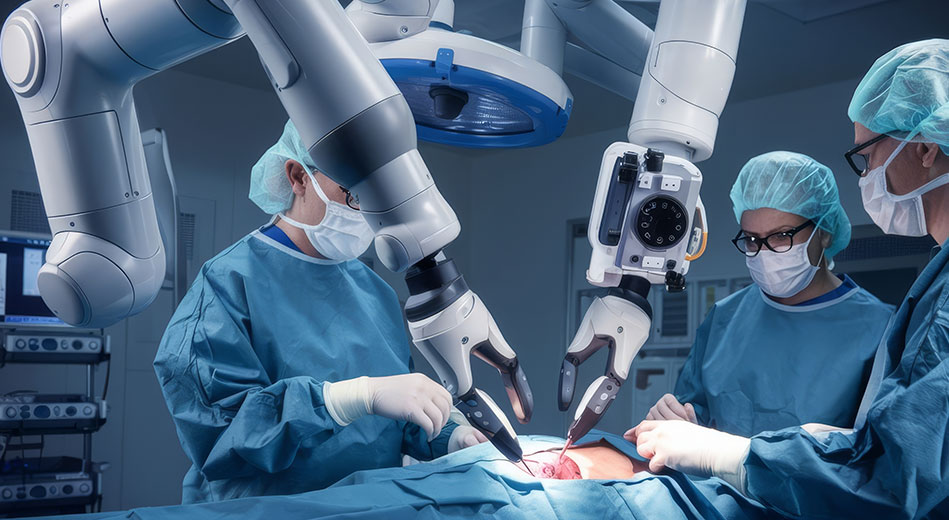
Head and Neck Robotic Surgery

  • Home
  • Head and Neck Robotic Surgery

Head and Neck Robotic Surgery


Course Image
Course Overview

The Head & Neck Robotic Surgery Training Program is designed to systematically develop operative precision, technical proficiency, and clinical confidence in robotic-assisted head and neck surgery.

Through a structured curriculum, participants gain expertise in robotic system setup, surgical planning, transoral robotic techniques, robotic instrumentation, and perioperative workflow management.

The program emphasizes advanced robotic technology, three-dimensional visualization, articulated instrument control, and evidence-based surgical principles using the Intuitive da Vinci Surgical System. Participants are guided through progressive hands-on learning experiences that enhance operative dexterity, spatial awareness, intraoperative decision-making, and robotic surgical ergonomics. This training prepares surgeons to perform complex head and neck robotic procedures with greater precision, efficiency, functional preservation, and patient safety.

Learning Objectives
  • Develop proficiency in robotic system setup, docking, console operation, and operating room workflow integration.
  • Build competency in three-dimensional visualization and articulated instrument control.
  • Strengthen operative decision-making skills for Transoral Robotic Surgery (TORS) and complex head and neck procedures.
  • Enhance surgical ergonomics, multidisciplinary communication, and patient safety practices in robotic surgical environments.
Learning Methodology
  • Expert-led didactic sessions covering robotic surgery principles, instrumentation, and procedural workflows.
  • Structured hands-on training using the Intuitive da Vinci Surgical System under faculty supervision.
  • Procedure-oriented robotic skill development with guided demonstrations and stepwise practice.
  • Performance-based assessment with real-time feedback, technical coaching, and skill refinement.
Learning Outcomes
  • Perform robotic system setup, docking, and console operations with confidence and efficiency.
  • Demonstrate precise robotic instrument handling.
  • Apply robotic surgical techniques safely during head and neck procedures with improved operative control.
  • Integrate technical and non-technical skills to optimize surgical performance, team coordination, and patient outcomes.
Eligibility Criteria
  • Licensed medical graduates (MBBS or equivalent) with valid institutional or national medical registration.
  • ENT Surgeons, Head & Neck Surgeons, Oncosurgeons, or surgical specialists seeking structured training in robotic-assisted surgery.
  • Surgical residents, fellows, and practicing consultants interested in developing robotic surgical skills are eligible to apply.
  • Basic knowledge of head and neck surgical anatomy, oncologic principles, and minimally invasive surgical techniques is preferred.
  • Prior exposure to robotic surgery is beneficial but not mandatory.
Course Modules
Module 1 - Introduction to Robotic Program
  • Fundamentals of Robotic Surgery (FRS)
  • Overview of Head & Neck Robotic Surgery
  • Human Factors: Situational Awareness in the Robotic Operating Theatre
  • Human Factors: Errors and Violations
  • Dry Lab Skill Development
  • Retractor Setting on Mannequin
  • Simulation Skill Development
Module 2 - Robot set-up
  • Patient Positioning and Retractor Setting
  • Robotic Docking Sequence
  • Surgical Procedure Setup and Facilitation
  • Surgical Team Roles and Responsibilities
  • Human Factors: Team Dynamics
Module 3 - Technical skills development
  • Start-Up and System Calibration
  • Docking Sequence and Instrumentation
  • Types of Retractors and Retractor Placement
  • Patient Cart Positioning
  • Simulation-Based Technical Skills Training
  • Robotic Workflow Familiarization
Module 4 - Non-Technical Skills development
  • Team Training Workshop
  • Simulation Team Training
  • Surgical Briefing and Debriefing
  • Communication Skill Development
  • Team Coordination and Collaborative Practice
Module 5 - Hand's on Practice Sessions
  • Patient Positioning and Retractor Setting
  • Robotic Docking Sequence
  • Surgical Procedure Setup and Facilitation
  • Surgical Team Coordination
  • Integrated Workflow Practice
  • Faculty-Guided Hands-On Training
WhatsApp
