
Implant Dentistry

  • Home
  • Foundations of Implant Dentistry

Implant Dentistry Training Program


Course Image
Course Overview

Foundations in Implant Dentistry is a simulation-based introductory program designed for dentists beginning their journey in implant dentistry.

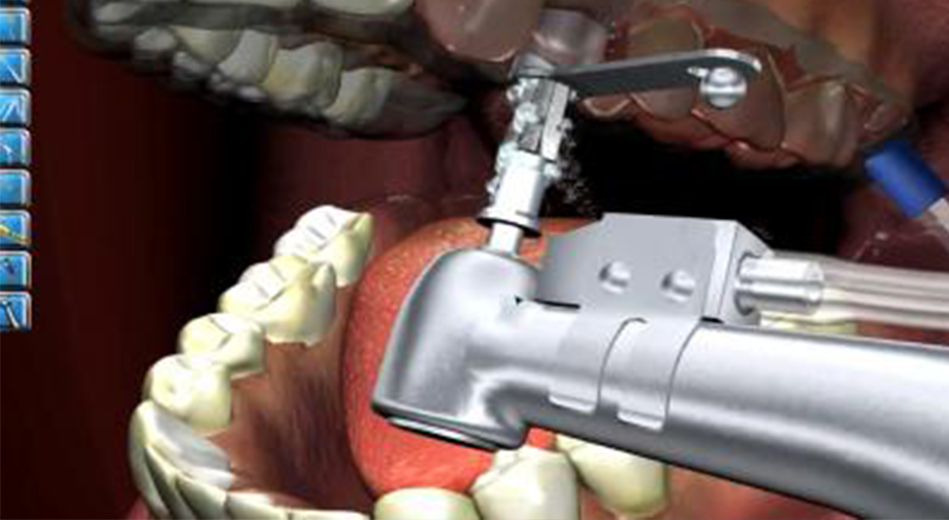
The course combines expert-led lectures, hands-on model practice, and advanced dental simulation to bridge the gap between theory and clinical practice. Participants can repeatedly practice essential implant procedures in a safe, controlled environment with real-time feedback.

Using real patient CBCT data within the simulator, participants can visualize implant positioning, drilling angulation, and proximity to vital anatomical structures—enabling effective practice, self-assessment, feedback, and skill refinement before transitioning to patient care.

Learning Objectives
  • To establish foundational and advanced skills in dental surgical practice
  • To promote safe, precise, and ergonomic use of dental surgical instruments
  • To introduce simulation and augmented-reality–based approaches in preclinical training
  • To develop competence in suturing, wound closure, and minor oral surgical procedures
  • To enhance understanding of complication management and postoperative care
  • To integrate simulation-based training within the undergraduate dental curriculum
Learning Methodology
  • Structured demonstration of procedures using dental simulators and typodont models
  • Hands-on practice in a controlled, risk-free simulation environment
  • Augmented-reality–assisted visualization for enhanced anatomical and procedural clarity
  • Stepwise simulation of oral surgical and multispecialty dental procedures
  • Skill-based training under guided faculty supervision
Learning Outcomes
  • Demonstrates correct surgical posture, ergonomics, and instrument handling
  • Performs suturing and wound closure techniques with precision and consistency
  • Executes simulated oral surgical and minor surgical procedures safely
  • Applies procedural skills across operative dentistry, prosthodontics, endodontics, and pediatric dentistry
  • Identifies and manages common intraoperative and postoperative complications
  • Shows improved hand–eye coordination, accuracy, and procedural confidence
  • Facilitates readiness for clinical dental practice through simulation-based training
Eligibility Criteria
  • Recognized dental qualification (BDS) or currently enrolled in a dental undergraduate program at an approved institution
  • Dental interns or recent graduates seeking structured simulation-based skill development
  • Allied dental professionals (dental hygienists or dental assistants) with relevant certification for applicable modules
  • Basic knowledge of dental instruments and preclinical procedures is desirable; prior simulation experience is not mandatory
Course Modules
Module 1: Basic Dental Surgical Skills
  • Correct sitting posture and working position during procedures
  • Learning how to use dental surgical instruments safely
  • Improving hand–eye coordination for precise movements
  • Using both hands efficiently during surgical work
  • Gentle and safe handling of oral tissues
  • Understanding simulation-based learning in dentistry
  • Role of augmented reality in preclinical training
  • Benefits of learning procedures in a risk-free environment
Module 2: Typodont & Tooth Model Selection
  • Understanding different typodont and tooth models
  • Selecting appropriate models for various procedures
  • Learning on realistic tooth anatomy
  • Adapting models for different years of study
Module 3: Advanced Suturing & Wound Closure Techniques
  • Closing wounds without tension
  • Practicing suturing in narrow oral spaces
  • Horizontal and vertical mattress sutures
  • Continuous suturing techniques
  • Proper flap closure after surgical procedures
Module 4: Oral Surgery Simulation Cases
  • Step-by-step practice of tooth extraction on models
  • Learning how to raise a flap safely
  • Managing the extraction socket after tooth removal
  • Basic principles of impacted tooth exposure
  • Smoothing bone edges and soft tissue management
Module 5: Minor Oral Surgical Procedures
  • Performing incision and drainage procedures on simulators
  • Learning basic biopsy techniques and tissue handling
  • Methods to control bleeding during minor surgery
  • Applying surgical dressings correctly
  • Understanding postoperative care instructions
Module 6: Handling Complications & Postoperative Care
  • Managing bleeding during and after procedures
  • Identifying and managing tooth or root fractures
  • Preventing and treating dry socket
  • Recognizing signs of infection and swelling
  • Knowing when and how to refer or escalate cases

WhatsApp