
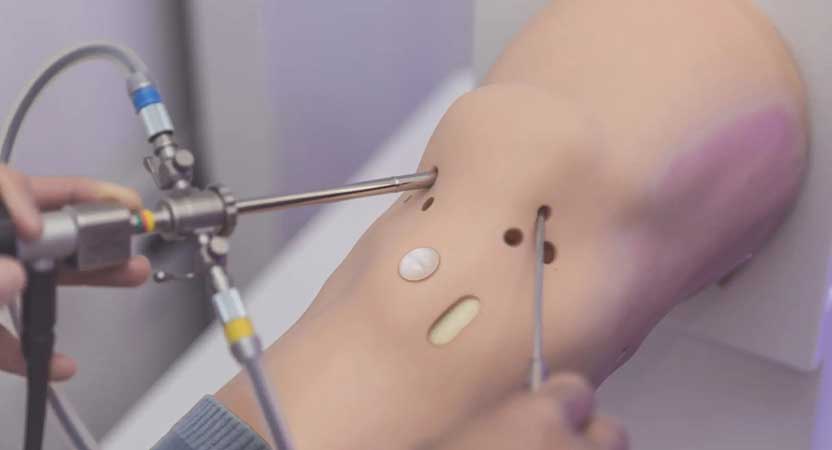
The Growing Importance of Arthroscopy Training in Modern Surgical Education
Arthroscopy has rapidly become one of the most widely used techniques in modern orthopedic surgery. From treating ligament injuries in the knee to addressing complex shoulder conditions, minimally invasive arthroscopic procedures have significantly improved patient outcomes. Smaller incisions, faster recovery, and reduced complications have made arthroscopy the preferred approach for many orthopedic interventions.
However, mastering arthroscopic procedures requires a different skill set compared to traditional open surgery. Surgeons must operate using a camera inserted into the joint while manipulating specialized instruments through small portals. This technical complexity has increased the need for structured arthroscopy surgical training and practical skill development.
As a result,arthroscopy simulation programs and dedicated simulation courses are becoming essential components of modern surgical education.
Why Arthroscopy Requires Specialized Surgical Training
Unlike conventional surgery, arthroscopy requires surgeons to work with indirect visualization. Instead of directly viewing the anatomy, the surgeon relies on a monitor that displays images captured by an arthroscope.
This approach demands exceptional hand–eye coordination, spatial awareness, and precise instrument control.
For many trainees, learning these techniques can be challenging at first. Tasks such as camera navigation, triangulation of instruments, and maintaining orientation inside the joint space require repeated practice.
This is why structured arthroscopy surgical training programs are now considered critical in helping surgeons develop the technical skills needed for minimally invasive procedures.
The Growing Role of Arthroscopy Simulation Programs
ditional surgical training often relied heavily on operating room exposure. However, with increasing emphasis on patient safety and operating room efficiency, opportunities for early technical practice can be limited.
To address this challenge, many training institutions have adopted arthroscopy simulation programs as a key part of surgical education.
Through these programs, surgeons can practice fundamental arthroscopic techniques in a controlled environment before performing procedures on patients.
Simulation-based learning allows trainees to:
- 1. Develop camera handling skills
- 2. Improve instrument coordination
- 3. Understand joint anatomy through arthroscopic visualization
- 4. Practice procedural steps multiple times
These benefits make arthroscopy simulation courses an effective way to accelerate technical learning while maintaining patient safety.
Benefits of Arthroscopy Simulation Courses
Structured simulation courses provide an opportunity for surgeons to refine their skills through focused hands-on practice.
Some of the key advantages include:
1. Skill Development Through Repetition
Repeated practice helps surgeons develop precision and control when performing arthroscopic procedures.
2. A Safe Learning Environment
Simulation allows trainees to learn from mistakes without the risks associated with live surgery.
3. Increased Surgical Confidence
Exposure to arthroscopic equipment and techniques improves confidence when performing procedures in the operating room.
4. Faster Learning Curve
Surgeons who participate in arthroscopy simulation courses often adapt more quickly to real surgical scenarios.
Because of these advantages, simulation-based training has become a valuable tool in orthopedic education worldwide.
Advancing Arthroscopy Training at Global Surgical Institute
Specialized training centers are increasingly supporting surgeons in developing advanced technical skills through immersive educational programs.
The Global Surgical Institute (GSI) is one such institution dedicated to advancing surgical education through hands-on learning. The institute offers structured arthroscopy simulation courses designed to help surgeons build practical expertise in minimally invasive techniques.
The arthroscopy simulation program at Global Surgical Institute focuses on developing essential surgical skills such as camera navigation, instrument handling, and procedural workflow. Participants benefit from guided instruction, modern training equipment, and opportunities to practice key techniques in a structured learning environment.
These training programs help bridge the gap between theoretical knowledge and real-world surgical practice.
Continuous Learning in Modern Arthroscopy
Arthroscopy continues to evolve as new technologies, instruments, and surgical techniques are introduced. As a result, ongoing education has become essential for orthopedic surgeons.
Many professionals now attend arthroscopy surgical training programs and simulation courses throughout their careers to stay updated with advancements in the field.
This commitment to continuous learning ultimately contributes to improved surgical outcomes and better patient care.
The Future of Arthroscopy Surgical Education
The future of surgical education will likely combine traditional clinical experience with advanced simulation-based learning.
Innovations such as virtual reality, digital performance tracking, and immersive arthroscopy simulation programs are already shaping the next generation of surgical training.
These technologies will allow surgeons to develop technical proficiency more efficiently while maintaining the highest standards of patient safety.
Conclusion
Arthroscopy has transformed orthopedic surgery by enabling minimally invasive procedures that improve patient recovery and outcomes. However, mastering these techniques requires structured learning and consistent practice.
Through dedicated arthroscopy simulation courses, and programs offered by institutions like the Global Surgical Institute, surgeons can develop the technical skills required for modern minimally invasive surgery.
As surgical education continues to evolve, simulation-based learning will remain an essential tool in preparing surgeons for the future of orthopedic care.
